


Skip to content

Architecture

Joint doctoral studies with the Vilnius Academy of Arts (the coordinating institution). The programme focuses on advanced research in architecture and urbanism, innovative design methodologies and critical approaches to contemporary architectural challenges. Students are given the chance to conduct independent research, generate new knowledge and insights, and analyse complex architectural issues.

apply let's talk!

Values of the Art Field

Female PhD student in pink blazer participating in eye tracking research using specialized eye tracking equipment – application of innovative neuroscientific research methods in doctoral studies at Kaunas University of Technology.
Relevance

These studies are distinguished by their international perspective, close mentorship and interdisciplinary approach, integrating architecture, urbanism and technology. The programme is designed to encourage experimental thinking and innovative solutions, providing doctoral students with the opportunity to become leaders in cutting-edge areas of architecture.


Two scientists in white protective suits discussing research in KTU laboratory while examining samples – doctoral studies scientific research environment at Kaunas University of Technology.
Opportunities

PhD graduates in Architecture can pursue careers in academia, research institutions, architectural firms or urban development agencies. They can work as architects, urban planners, consultants, lecturers or researchers, using their expertise to design innovative projects and improve the built environment.


Female PhD student in laboratory attire conducting precise experimental research with microscope and specialized equipment in KTU laboratory – practical doctoral studies competencies and career prospects at Kaunas University of Technology.
Benefits

Doctoral students have the opportunity to pursue a double degree programme at the University of Bologna. Each student works under an individual study, creative and research plan, which fosters steady progress, creativity, critical thinking and the generation of new insights in the field of architecture.

Group of PhD students standing around white table in bright, modern space collaborating and discussing research – doctoral studies collaboration culture, scholarships and funding opportunities at Kaunas University of Technology.
Funding

Doctoral students can benefit from various financial incentives to support their studies, research, artistic activities, and conference attendance. They can apply for Erasmus+ funding to conduct research abroad, as well as one-off scholarships based on academic achievement and scientific activity.

Research Topics

Topic title Possible scientific supervisors Source of funding
Application of the "Tree City" Concept in Modeling Urban Structures 
doc. prakt. Gražina Bernotienė
prof. dr. Jūratė Kamičaitytė »
state-funded
Research Topic Summary.
The presented topic will seek to assess to what extent and which principles of the functioning of natural ecosystems could be relevant in creating more sustainable cities characterized by circular metabolism, creating a self-regulating sustainable connection with the biosphere (dynamic equilibrium), how this could be realized from a methodological and technological point of view, and how this could be expressed in the aesthetic visual dimension and reflected in the psychonomic level of perception of urban structures.


Admission Requirements and Study Modules in the Field of Art

An arrow icon pointing right – represents the study level (Bachelor, Master, or PhD) in a structured academic path.
Cyclethird cycle
A clock icon indicates the form and duration of the programme.
Form, durationfull-time studies (4 yr.)
A speech bubble icon represents the language of instruction – often English for international, top-rated study programmes.
Language – Lithuanian, English
A graduation cap icon represents the degree awarded upon completion – bachelor’s, master’s, or doctoral qualification from a top university in Lithuania.
Degree awarded – Doctor of Art

Study Modules

Main modules

Module name Credits Method of organisation
Art Project Development Seminar 6
Artistic Research Methods 6
Transdisciplinary Research Methods 6 On-campus learning
Writing workshop for artist-researchers 3

Elective modules

Module name Credits Method of organisation
Architectural Criticism 6
Architectural Utopias and Experimental Practices 6
Contemporary Architectural Theory 6 On-campus learning
Contemporary Media Expression and Technology 6
Cultural Policy 6
Culture of Memory 6
Designing a PhD Research Project 9 On-campus learning
Energy Efficiency of Buildings 6 On-campus learning
History and Theory of Photography 6
Innovative Computer Modelling Methods 6
Mathematical Models in Informatics 9 Blended learning
Media Theories and Practices 6
Methods of Information Technologies 9 Blended learning
Neural Networks and Neurocomputing 6 On-campus learning
Philosophy and Trends in Contemporary Architecture 6
Philosophy, Systems and Didactics of Higher Education 8 Blended learning
Problems of Contemporary Philosophy of Art 6
Sociology of Culture 6
Statistical Methods in Social Sciences 6 Blended learning
The Practice of Theory and the Theory of Practice in Artistic Research 6
Theory and Heritage of Modern Architecture 6
Theory and Practice of Curating 6
Urban Genotypes 6 On-campus learning
Good to know
  • Main modules – provide essential knowledge in the field.
  • Elective modules – help to individualize studies according to personal needs.
  • Core skills modules – develop general competences.
  • Main modules – provide essential knowledge in the field.
  • Elective modules – help to individualize studies according to personal needs.
  • Core skills modules – develop general competences.
  • Main modules – provide essential knowledge in the field.
  • Elective modules – help to individualize studies according to personal needs.
  • Core skills modules – develop general competences.
Persons with a Master's degree in architecture or arts or equivalent higher education qualification may participate in an open competition for admission to doctoral studies.
Applicants to the doctoral field of science are accepted by competition according to the competition score.
 Minimum competition score 7.0.
0,4 portfolio
0,2 description of art research project creative part
0,2 description of art research project theoretical part
0,2 interview
admission requirements dates and deadlines for admission all science (art) fields

Testimonials

A young man with short dark hair, a mustache and beard, wearing a dark polo shirt, arms crossed in front, smiling professionally, photographed against a neutral background.

I chose to continue my doctoral studies at KTU because I believe in the opportunities offered by the university, the expertise of the lecturers, and the supportive community that fosters growth. This field of study is unique because it is jointly organised by KTU and the Vilnius Academy of Arts. This allows students to experience two different approaches, expand their knowledge in various fields of science and art, and observe the processes first-hand.

Arnas Džiaugys
PhD student
Minimalist icon depicting a PhD student, contour line, gray background.

Although the joint doctoral programme in architecture with the Vilnius Academy of Arts is very new, it is highly relevant. It is ideal for those seeking unique ideas in a reasoned, conceptual way, transforming their creative or research activities into a specific method of artistic enquiry. Rather than presenting the tools themselves, the programme focuses on the ways in which they can be used.

Gediminas Viliūnas
PhD student
Minimalist icon depicting an academic person, contour line, gray background.

After more than thirteen years of private practice in interior architecture, I feel very privileged to be able to return to academia and study. KTU’s doctoral programme in art field offers the chance to analyse pressing social issues from various angles and develop creative solutions.

Renata Mockutė
Architect


FAQ

The main admission to KTU PhD studies in Architecture takes place in March. If there are still state-funded or self-funded places available after this stage, an additional admission is announced in autumn. Exact admission dates can be found in the section “Dates and Deadlines”.

KTU Architecture doctoral studies stands out for its strong focus on advanced research in architecture and urbanism, the application of innovative design methods, and a critical approach to contemporary architectural challenges. The programme provides opportunities to conduct independent research, generate new knowledge and insights, and analyse complex architectural issues.

Graduates of Architecture doctoral studies may work as architects, urban planners, consultants, lecturers, or researchers, applying their knowledge to develop innovative projects and improve environmental quality.


Contacts

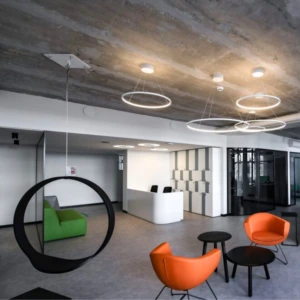
Modern interior of the KTU student information center featuring futuristic ceiling lights, orange and green lounge chairs, and a white reception desk in the background. The space is designed for student consultations and information services.

Doctoral School

Studentų g. 50, 51368 Kaunas
email phd@ktu.lt

let's talk

Faculty of Civil Engineering and Architecture
IX Chamber
Studentų g. 48, LT-51367 Kaunas
email saf@ktu.lt

Button Iconvirtual tour