


Skip to content

History and theory of arts

The History and Theory of Arts PhD programme is designed for emerging researchers seeking new perspectives on the analysis of contemporary art and cultural contexts. Adopting an interdisciplinary approach, they explore phenomena in art, visual culture and architecture using methods from the humanities, social sciences and technologies. The programme has a strong focus on innovative research models and the creation of new knowledge.

apply let's talk! about science field

Values of the Science Field

Female PhD student in pink blazer participating in eye tracking research using specialized eye tracking equipment – application of innovative neuroscientific research methods in doctoral studies at Kaunas University of Technology.
Relevance

These studies examine the impact of art and visual culture on society, political ideologies and cultural processes. They encourage research into the multifaceted influence of art and architecture, from urban planning to contemporary forms of activism, which all contribute to societal and cultural development.


Two scientists in white protective suits discussing research in KTU laboratory while examining samples – doctoral studies scientific research environment at Kaunas University of Technology.
Opportunities

Graduates can become researchers and experts, working in academia, museums, galleries and cultural heritage institutions. They can also pursue careers in art criticism, lead interdisciplinary projects and develop cultural policy strategies to promote social change through art analysis.


Female PhD student in laboratory attire conducting precise experimental research with microscope and specialized equipment in KTU laboratory – practical doctoral studies competencies and career prospects at Kaunas University of Technology.
Benefits

The study programme offers the opportunity to pursue a double degree with the University of Bologna, obtain the Doctor Europaeus Certificate and engage in paid project work. Students can also gain teaching experience, present their research results at public science outreach events and participate in collaborative projects with industry and businesses.

Group of PhD students standing around white table in bright, modern space collaborating and discussing research – doctoral studies collaboration culture, scholarships and funding opportunities at Kaunas University of Technology.
Funding

KTU offers various funding opportunities for PhD students, including scholarships for study and research, support for participation in international conferences and events, and Erasmus+ funding for research abroad. There are also additional scholarships for academic achievement and scientific activity, as well as one-time achievement-based university scholarships.

Research Topics

Topic title Possible scientific supervisors Source of funding
The distribution of loudness and silence in 20th-21st century Lithuanian fiction and music 
prof. dr. Saulius Keturakis »
state-funded
Research Topic Summary.
Interdisciplinary studies of Lithuanian culture typically analyze the connections between music and fiction by examining influences—how literary features impact music or vice versa.This study proposes a more universal perspective: searching for a correlation between loudness and silence in the works of Lithuanian composers and writers. While music communicates these elements directly, the written word is "silent," resonating indirectly in the reader's mind. Utilizing Lithuanian linguistics research, the study will first identify verbal data that reveals loudness and silence levels within virtual literary worlds. Once criteria are established, trained Artificial Intelligence (AI) tools will analyze vast periods of Lithuanian music and literary history, rather than just a few works. The results will offer a data-rich perspective on Lithuanian culture, allowing for the observation of correlations between loudness/silence and sociocultural processes.
Identity as an Architectural Strategy: Narratives of Lithuanian-ness in Interwar, Soviet, and Diaspora Architecture 
doc. dr. Vaidas Petrulis »
state-funded
Research Topic Summary.
The dissertation proposes to examine how Lithuanian architectural identity was formed and interpreted across different twentieth-century contexts. The study would be based on a comparative approach, bringing together three thematic fields that have most often been treated separately in previous academic research: the interwar period, the Soviet era, and the Lithuanian diaspora. The analysis would explore how political systems, cultural ruptures, and migration shaped the expression of Lithuanian-ness in architecture, how identity narratives were constructed, and what strategies architects and communities employed to preserve or reinvent cultural distinctiveness. The aim of the research would be to develop a new, integrated interpretation of Lithuanian architectural identity, relevant both to the historiography of Lithuanian architecture and to international studies of Eastern European and diasporic modernisms.
From "male gaze" to "human gaze": continuity between patriarchism and speciesism in audiovisuality 
prof. dr. Dario Martinelli »
state-funded
Research Topic Summary.
The doctiral topic deals with gaze as a cultural construction (from Mulvey’s concept of the male gaze and Berger’s concept of the human gaze). The aim is to show, through an analysis of audiovisual texts how women and animals have culturally been the objects of a speciesist and patriarchal gaze, and how contemporary cinema and television display emerging alternative forms of representation.
Street Art as a Medium of Memory: A Semiotic Interpretation of the Visual Culture of Public Spaces 
prof. dr. Saulutė Juzelėnienė »
state-funded
Research Topic Summary.
In contemporary cities, street art has become an important form of cultural memory expression through which communities visually commemorate collective experiences, historical events, and local identities. Public spaces are transformed into fields of memory where narratives of history, resistance, and everyday life intertwine. Drawing on theories of semiotics, visual culture, and cultural memory, the research explores how street art functions as a medium of memory that shapes urban identity and the cultural field of self-awareness. The project also examines the role of digital media and technologies in creating, documenting, and interpreting public art.
Built heritage in Lithuania Minor: issues of identity, memory and preservation doc. dr. Aušra Mlinkauskienė »
state-funded
The Semiotics of Public Spaces and Artistic Activism: Street Art as an Instrument of Urban Identity and Cultural Critique 
prof. dr. Saulutė Juzelėnienė »
state-funded
Research Topic Summary.
In contemporary cities, street art has become not only a form of aesthetic expression but also a means of social communication and cultural critique. The research explores how street art created in public spaces functions as a form of artistic activism that shapes urban identity and fosters social dialogue. Drawing on theories of semiotics and intermediality, the study analyzes how visual signs, symbols, and spatial structures generate meanings that reveal aspects of urban culture, memory, and resistance. It also seeks to determine the role of contemporary technologies and digital media in the development and interpretation of public art.


Admission Requirements and Study Modules in the Field of Science

An arrow icon pointing right – represents the study level (Bachelor, Master, or PhD) in a structured academic path.
Cyclethird cycle
A clock icon indicates the form and duration of the programme.
Form, durationfull-time studies (4 yr.)
A speech bubble icon represents the language of instruction – often English for international, top-rated study programmes.
Language – Lithuanian, English
A graduation cap icon represents the degree awarded upon completion – bachelor’s, master’s, or doctoral qualification from a top university in Lithuania.
Degree awarded – Doctor of Science

Study Modules

Main modules

Module name Credits Method of organisation
Artistic Text and its Research Methods 6 On-campus learning
Contemporary Architectural Theory 6 On-campus learning
Cultural Ecology 6 On-campus learning
Digitality and Art 6 On-campus learning
Empirical Musicology 6 On-campus learning
Musical Semiotics 6 Distance learning
Semiotics of Architecture 6 On-campus learning
Transdisciplinary Research Methods 6 On-campus learning
Urban Genotypes 6 On-campus learning
Good to know
  • Main modules – provide essential knowledge in the field.
  • Core skills modules – develop general competences.
  • Main modules – provide essential knowledge in the field.
  • Core skills modules – develop general competences.
Persons with a Master's Degree or equivalent degree of higher education in the fields of Humanities, Social Sciences or Arts may participate in an open competition for admission to doctoral studies.
Applicants to the doctoral field of science are accepted by competition according to the competition score. 
Minimum competition score 8.0.
0,35 weighted grade point average of the diploma supplement
0,3 research experience
0,35 otivation interview
admission requirements dates and deadlines for admission all science (art) fields

Testimonials

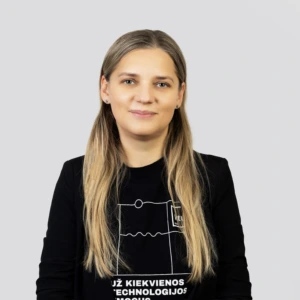
A young blonde woman with long straight hair, wearing a black sweater, smiling professionally against a neutral background.

Although the university provides an inspiring environment, it was the people there who motivated me to choose KTU for the third time. During my four years of study, I have grown a lot. My dissertation, my involvement in the UPRUN project, conferences abroad, collaborating with researchers, and working at the faculty have given me invaluable experience that I would like to repeat.

Eglė Januškienė
PhD student
Minimalist icon depicting a PhD student, contour line, gray background.

KTU stands out for its transparent admissions process and clear programme and study system. I am a member of the Cultural and Spatial Environment research group, which involves not only analysing historical sources and literature but also contributing to the resolution of environmental and societal issues. International cooperation provides an opportunity to gain experience and evaluate the global significance of my research.

Indraja Raudonikytė
PhD student


FAQ

The list of research topics offered by the University in the science field of History and Theory of Arts can be found in the section “Research Topics”.

Yes, all applicants to KTU doctoral studies must participate in a motivation interview. During the interview, the candidate’s motivation and preparedness for doctoral studies are discussed. English language proficiency is also assessed.

PhD students receive a scholarship calculated based on the state-established Basic Social Benefit (BSI). In the first year of studies, the scholarship amounts to 19.0 BSI per month, while second, third and fourth-year doctoral students receive 22.0 BSI per month.

In 2026, the monthly scholarship for first-year students is 1,406 EUR, and for second to fourth year doctoral students it is 1,628 EUR per month.


Contacts

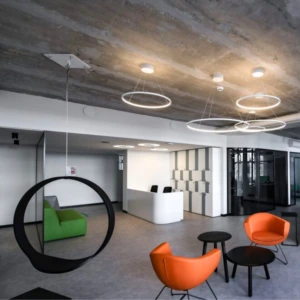
Modern interior of the KTU student information center featuring futuristic ceiling lights, orange and green lounge chairs, and a white reception desk in the background. The space is designed for student consultations and information services.

Doctoral School

Studentų g. 50, 51368 Kaunas
email phd@ktu.lt

let's talk

Faculty of Social Sciences, Arts and Humanities
I Chamber
A. Mickevičiaus St. 37, LT- 44244 Kaunas
email shmmf@ktu.lt

Button Iconvirtual tour

Faculty of Civil Engineering and Architecture
IX Chamber
Studentų g. 48, LT-51367 Kaunas
email saf@ktu.lt

Button Iconvirtual tour