

Skip to content

Physics

Doctoral studies organised in collaboration with the University of Southern Denmark.

The Physics PhD programme is designed for individuals seeking to explore the fundamental laws of nature and contribute to cutting-edge scientific discoveries. The programme provides in-depth theoretical knowledge and practical skills in condensed matter, radiation–matter interaction and optical spectroscopy.

apply let's talk! about science field

Values of the Science Field

Female PhD student in pink blazer participating in eye tracking research using specialized eye tracking equipment – application of innovative neuroscientific research methods in doctoral studies at Kaunas University of Technology.
Relevance

Students work with advanced technologies and methods. They conduct research focused on the practical applications of biosensors, plasmonics, renewable energy and other high-tech fields. This contributes to scientific progress and the impact of innovations on industry and society.


Two scientists in white protective suits discussing research in KTU laboratory while examining samples – doctoral studies scientific research environment at Kaunas University of Technology.
Opportunities

KTU’s doctoral programme in Physics offers collaboration with academic and non-academic partners, as well as access to state-of-the-art research equipment. Graduates gain the skills to conduct independent research and develop solutions that drive technological progress. The programme opens up a range of career opportunities, from academia to leadership roles in industry.


Female PhD student in laboratory attire conducting precise experimental research with microscope and specialized equipment in KTU laboratory – practical doctoral studies competencies and career prospects at Kaunas University of Technology.
Benefits

These studies offer the opportunity to pursue a double degree with the University of Bologna and earn the Doctor Europaeus Certificate through the PCAM network. Funding is also available for skills development in scientific communication, project management and research ethics. Doctoral students have an opportunity to engage in paid project work, teaching experience and participation in industry collaborations.

Group of PhD students standing around white table in bright, modern space collaborating and discussing research – doctoral studies collaboration culture, scholarships and funding opportunities at Kaunas University of Technology.
Funding

A competitive monthly scholarship is offered, along with support for research and attendance at international conferences. Opportunities include up to one year of Erasmus+ research abroad and funding for international events. Additional scholarships are awarded for high academic performance and scientific activity.

Research Topics

Topic title Possible scientific supervisors Source of funding
Grain boundary diffusion during glow discharge plasma interaction with solid composites prof. habil. dr. Arvaidas Galdikas »
state-funded
Formation of fractal metal thin-film Schottky contacts by e-beam evaporation for detection of critical gases and narcotics-related organic vapors 
doc. dr. Vytautas Stankus »
state-funded
Research Topic Summary.
This research will fabricate ultra-thin fractal metal structures (Pd, Pt, Au, Ni, Ag) on semiconductor substrates (SiC, GaN, ZnO, MoS2) using e-beam evaporation under low-thickness, percolation-threshold conditions. Such films naturally form fractal or dendritic islands with extremely long perimeters, creating highly sensitive Schottky junctions where gas adsorption modulates the barrier height. The project will study the detection of critical industrial gases (H2, NO2, CO, NH3, O3) and trace organic vapors associated with narcotics, including methyl benzoate (cocaine marker), terpenes (cannabis), and volatile amines. Experimental work includes thin-film growth, SEM/AFM morphological analysis, I-V and C-V Schottky characterization, and gas/vapor response testing. The goal is to correlate fractal geometry, barrier modulation, and vapor sensitivity, providing a new design strategy for high-performance, low-power gas sensors.
Study of the Charge Carrier Transport and Self-Doping Processes in Directly Synthesized Graphene vyr. m. d. dr. Šarūnas Meškinis »
state-funded
The formation and characterization of metal doped diamond-like carbon films 
prof. dr. Liutauras Marcinauskas »
state-funded
Research Topic Summary.
Diamond-like carbon (DLC) film as an effective protective coating has been extensively studied for more than two decades, due to the outstanding properties such as low friction coefficient, high wear resistance or chemical inertness, biocompatibility and optical transparency. Doping metal elements (Zr or Cr) into diamond-like carbon (DLC) films can improve the mechanical and tribological properties, but the preparation and commercialized application of metal (Zr Cr) doped DLC films with well-defined structure and required mechanical and tribological properties are currently hindered by the non-comprehensive understanding of structural evolutions under different magnetron sputtering parameters, used metal types or concentration.
Formation and investigation of thin film superclattice of multiferroic magnetoelectrics 
doc. dr. Vytautas Stankus »
state-funded
Research Topic Summary.
Many sensors, controlling devices that transform information and energy are already being successfully used. One class of such materials is inorganic complex metal oxides with so-called active dielectric properties. They are often referred to as "smart materials". It are substances which transform various physical effects (mechanical, thermal, radiative, light, electric or magnetic, etc.) into an electrical signal which can be recorded. In addition, these materials have the opposite effect - when exposed to an electric field, they change their state - ferroelectric, ferroelastic, electrostriction, pyroelectric, magnetoelectric, electro-optical, electrocaloric and other phenomena are observed. For a long time (about 20 years) in the world of science and technology, these materials have been emphasized as necessary for ferromagnetics or ferroelectrics. However, the first multiferroic material with ferroelectric and (albeit weak) ferromagnetic properties was synthesized in 2003, bismuth ferrite BiFeO3 (BFO). The combined effect of having both properties (both ferroelectric and ferromagnetic at room temperature) was discovered only in 2014. Using ferromagnetic additional layers, a team of scientists from the United States developed a multilayer superlattice structure with magnetoelectric properties. According to the literature, this is the first structure discovered with strong magnetoelectric properties at room temperature, but this effect was and is too weak to apply such layers in production. These properties make it possible to look at these materials as a completely new type of memory cell, the magnetization (and direction) of which can only be changed by an electric field. Moreover, due to the residual magnetization effect, the storage of information in these memories will not require energy support. The proposed research on this topic will be carried out by synthesizing multiferroic magnetoelectric layers by reactive magnetron sputter deposition.
Multifunctional sensors based on metal oxide nanoparticle investigation vyr. m. d. dr. Simas Račkauskas »
state-funded
Formation and investigation of proton-conducting thin films 
prof. dr. Giedrius Laukaitis »
state-funded
Research Topic Summary.
Proton-conductive BZCY (Ceria and Yttria doped Barium Zirconate) ceramics are considered one of the most promising materials for medium-temperature energy conversion technologies, especially for proton ceramic fuel cells and electrolysis devices, as they allow for efficient proton transport and operate at lower temperatures than traditional oxide electrolytes. The advantages of these materials lie in their high proton conductivity, good structural compatibility with electrodes, and potential to reduce system energy costs, but their application is limited by high synthesis temperatures, grain boundary resistance, insufficient chemical stability in CO2 and H2O environments, and the complexity of balancing conductivity and stability by changing the Zr/Ce ratio. The novelty of future research lies in the control of advanced additives, synthesis, and microstructure to create ceramics with reduced synthesis temperatures, homogeneous microstructures, and higher proton conductivity. The aim of the research is to optimize the composition and forming conditions of BZCY ceramics using physical vacuum forming methods and to improve chemical stability and proton conductivity in energy conversion systems. To achieve this goal, the following tasks are set: to form thin layers of BZCY ceramics, allowing to reduce the synthesis temperature and obtain a dense, uniform microstructure; to determine the influence of the Zr/Ce/Y ratio and impurities on the parameters of the crystal lattice, defect concentration, and proton conductivity; to evaluate the effect of grain boundaries, porosity, and phase impurities on proton transport and electrochemical properties; to investigate the chemical stability of BZCY ceramics in CO2 and H2O environments and their interaction with electrodes.
Resonant light interaction with photonic structures for energy generation 
prof. dr. Tomas Tamulevičius »
state-funded
Research Topic Summary.
Renewable energy sources such as solar and hydrogen help reduce greenhouse gas emissions. The efficiency of solar cells depends on light absorption, which can be improved by developing wide-spectrum semiconductor materials, combining elements into tandem structures, and applying photonic solutions to enhance scattering and absorption. Nanostructures smaller than the wavelength of light can extend the optical path, reflect unabsorbed radiation, resonantly absorb electromagnetic waves, and inject hot carriers, thus utilizing a broader spectrum. Another promising approach is the development of photonic structures with selective interaction achieved through tailored nanogeometries. This work aims at the creation of photonic heterostructures, characterization of their interaction with light, and evaluation of potential applications for energy generation. The objectives of the work are devoted to simulating and experimentally originating light-absorbing heterojunctions of plasmonic and semiconductor materials, exploiting self-assembly and thin film deposition methods. To characterize the charge transport phenomena occurring in these nanostructures using kinetic spectroscopy and photoelectrochemical measurements. To adapt heterostructures to renewable energy applications.
Investigation of the dynamic plasmonic properties of symmetric and asymmetric nanostructures vyresn. m. d. dr. Domantas Peckus »
state-funded


Admission Requirements and Study Modules in the Field of Science

An arrow icon pointing right – represents the study level (Bachelor, Master, or PhD) in a structured academic path.
Cyclethird cycle
A clock icon indicates the form and duration of the programme.
Form, durationfull-time studies (4 yr.)
A speech bubble icon represents the language of instruction – often English for international, top-rated study programmes.
Language – Lithuanian, English
A graduation cap icon represents the degree awarded upon completion – bachelor’s, master’s, or doctoral qualification from a top university in Lithuania.
Degree awarded – Doctor of Science
Good to know
  • Main modules – provide essential knowledge in the field.
  • Alternative modules – allow deeper focus on alternative topics within the field.
  • Elective modules – help to individualize studies according to personal needs.
  • Core skills modules – develop general competences.
  • Main modules – provide essential knowledge in the field.
  • Alternative modules – allow deeper focus on alternative topics within the field.
  • Elective modules – help to individualize studies according to personal needs.
  • Core skills modules – develop general competences.
  • Main modules – provide essential knowledge in the field.
  • Alternative modules – allow deeper focus on alternative topics within the field.
  • Elective modules – help to individualize studies according to personal needs.
  • Core skills modules – develop general competences.
  • Main modules – provide essential knowledge in the field.
  • Alternative modules – allow deeper focus on alternative topics within the field.
  • Elective modules – help to individualize studies according to personal needs.
  • Core skills modules – develop general competences.
Persons with a Master's Degree or equivalent degree of higher education may participate in an open competition for admission to doctoral studies.
Applicants to the doctoral field of science are accepted by competition according to the competition score. 
Minimum competition score 7.0.
0,35 weighted grade point average of the diploma supplement i
0,3 research experience
0,35 motivation interview
Diploma and diploma supplement of the bachelor’s qualification degree.
Research proposal on the selected topic.
admission requirements dates and deadlines for admission all science (art) fields

Testimonials

A young man with short dark hair, wearing glasses and a beard, dressed in a red zip-up fleece, standing with his arms crossed, calm and neutral expression, photographed against a neutral background.

The most interesting part of doctoral studies is when experiments confirm hypotheses. KTU has a lot of high-tech equipment that doctoral students can easily access, so they can easily examine samples using SEM and AFM or grow thin film layers. Numerous projects provide experience of working in international teams.

Gvidas Klyvis
PhD student


FAQ

KTU PhD students in Physics have the opportunity to pursue a double degree with the University of Bologna (Italy) and to obtain a European Doctorate certificate by participating in the international Physics and Chemistry of Advanced Materials (PCAM) network.

Yes, all applicants to KTU doctoral studies must participate in a motivation interview. During the interview, the candidate’s motivation and preparedness for doctoral studies are discussed. English language proficiency is also assessed.


Contacts

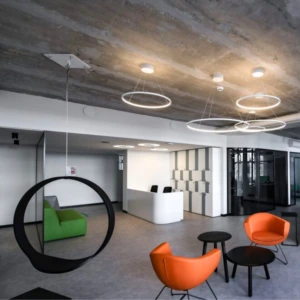
Modern interior of the KTU student information center featuring futuristic ceiling lights, orange and green lounge chairs, and a white reception desk in the background. The space is designed for student consultations and information services.

Doctoral School

Studentų g. 50, 51368 Kaunas
email phd@ktu.lt

let's talk

Institute of Materials Science
K. Baršausko St. 59, LT-51423 Kaunas
email mmi@ktu.lt

Button Iconvirtual tour