



Skip to content

Transport Engineering

This is a joint doctoral programme together with Vilnius Gediminas Technical University (the coordinating institution), Klaipėda University and Vytautas Magnus University. The Transport Engineering PhD study programme trains highly qualified researchers capable of addressing current challenges in the transport sector. Research areas include weapon system dynamics, vehicle development, train and transport system analysis, and aircraft structural mechanics. There is also the possibility to conduct part of the studies or research abroad.

apply let's talk!

Values of the Science Field

Female PhD student in pink blazer participating in eye tracking research using specialized eye tracking equipment – application of innovative neuroscientific research methods in doctoral studies at Kaunas University of Technology.
Relevance

Transport engineering addresses contemporary issues relating to mobility, safety and infrastructure. This includes finding energy-efficient transport solutions, managing transport systems digitally and innovating vehicle and system design. This research helps to develop transport infrastructure that is more efficient, safer and more sustainable.


Two scientists in white protective suits discussing research in KTU laboratory while examining samples – doctoral studies scientific research environment at Kaunas University of Technology.
Opportunities

Doctoral students acquire advanced research skills and have the opportunity to collaborate with industry and international institutions on projects and at conferences. Upon graduation, they can pursue careers in academia, research or industry, tackling transport challenges and driving innovation.


Female PhD student in laboratory attire conducting precise experimental research with microscope and specialized equipment in KTU laboratory – practical doctoral studies competencies and career prospects at Kaunas University of Technology.
Benefits

Doctoral students have the opportunity to pursue a double degree programme with the University of Bologna and receive the Doctor Europaeus Certificate. The university offers opportunities to engage in paid project activities and participate in the implementation of paid contracts with business and industry partners.

Group of PhD students standing around white table in bright, modern space collaborating and discussing research – doctoral studies collaboration culture, scholarships and funding opportunities at Kaunas University of Technology.
Funding

Doctoral students can receive various forms of financial support, including monthly scholarships, funding for studies and research, and additional scholarships for high academic achievement and performance during their studies. They also have the opportunity to conduct research funded by the Erasmus+ programme at institutions abroad for up to one year.

Research Topics

Topic title Possible scientific supervisors Source of funding
Development of a Comprehensive Methodology for Ensuring Energy Efficiency and Passenger Comfort in Electric Buses under Various Climatic Conditions 
doc. dr. Rolandas Makaras »
state-funded
Research Topic Summary.
The aim of this work is to develop an experimentally validated methodology that allows optimizing the energy consumption of electric buses under various climatic conditions while ensuring a high level of passenger comfort.
Integrated Computational–Experimental Development of an Advanced Cooling System for Electric Vehicle Battery Controllers Using Novel Hybrid Fluids 
prof. dr. Laurencas Raslavičius »
state-funded
Research Topic Summary.
The rapid electrification of transportation has significantly increased the demand for efficient and reliable thermal management systems for electric vehicle (EV) power electronics and battery controllers. These components generate substantial heat during high-load and fast-switching operations, and excessive temperature rise can reduce efficiency, reliability, and operational lifespan while increasing the risk of thermal failure. This research aims to develop an advanced hybrid thermal management system for EV battery controllers through an integrated computational–experimental framework. The study will focus on analyzing heat generation mechanisms within controller modules and designing optimized cooling architectures incorporating liquid, gaseous, hybrid, and nano-enhanced cooling fluids. A detailed three-dimensional numerical model of the EV battery controller will be developed using CFD and Multiphysics simulation tools. The model will simulate heat transfer, fluid flow behavior, temperature gradients, and thermal stresses under varying operating conditions. Special emphasis will be placed on enhancing thermal uniformity and minimizing peak temperature regions within the controller. Furthermore, multi-objective optimization techniques will be applied to evaluate and improve cooling efficiency, pumping power requirements, system compactness, and overall energy consumption. Novel hybrid cooling fluids and nanofluids will be experimentally characterized to validate numerical predictions and assess their thermophysical performance. The outcomes of this research will contribute to improving thermal reliability, energy efficiency, and durability of EV electronic control systems, thereby supporting the advancement of sustainable and high-performance electric mobility technologies.


Admission Requirements and Study Modules in the Field of Science

An arrow icon pointing right – represents the study level (Bachelor, Master, or PhD) in a structured academic path.
Cyclethird cycle
A clock icon indicates the form and duration of the programme.
Form, durationfull-time studies (4 yr.)
A speech bubble icon represents the language of instruction – often English for international, top-rated study programmes.
Language – Lithuanian, English
A graduation cap icon represents the degree awarded upon completion – bachelor’s, master’s, or doctoral qualification from a top university in Lithuania.
Degree awarded – Doctor of Science

Study Modules

Main modules

Module name Credits Method of organisation
Academic Communication 6
Aerospace Engineering 6
Dynamics and Mathematical Simulation of Vehicle Transmissions 6
Dynamics of Armament Systems 6 Blended learning
Fundamentals of scientific research methods 9
Mathematical Simulation of Dynamics, Hydrodynamics and Thermodynamics Processes in the Vehicle and Technological Equipment 6
Metrology Theory and Practice in the Production of Aviation 6
Nonlinear Vehicle Dynamics 9
Optimization and Optimal Control of Transport Technological Processes 6
Problems of Intermodal Transport System and Solutions 6
Rotortronics. Dynamics and Diagnostics. 6
Simulation Dynamic Processes of Road Traffic Flow 6
The Interaction of Vehicles and Road 6
Theory of Internal Combustion Engines 6
Traction Electric Drives and their Control 6
Traction Theory of Rail Vehicle 6
Good to know
  • Main modules – provide essential knowledge in the field.
  • Core skills modules – develop general competences.
  • Main modules – provide essential knowledge in the field.
  • Core skills modules – develop general competences.
admission requirements dates and deadlines for admission all science (art) fields

Testimonials

Portrait photo of a young man with long dark hair tied back in a ponytail. He is wearing a light sweater with a visible denim shirt collar. The man is smiling while looking at the camera, against a neutral light grey background.

I have long been interested in aviation, so I am delighted to have the opportunity to deepen my knowledge of this field and engage in scientific activities. This doctoral programme brings together specialists in aviation and land transport. This creates opportunities for interesting and relevant joint activities. As a doctoral student, I feel like an integral member of the team responsible for developing the university’s research potential in aviation engineering.

Mindaugas Dagilis
KTU alumnus, PhD student
Minimalist icon depicting an academic person, contour line, gray background.

The state-of-the-art facilities at the KTU Faculty of Mechanical Engineering and Design greatly enhanced the quality of my research and prototyping capabilities. I conducted the most memorable work in the wind tunnel laboratory, where I tested the wing elements that I had designed. The long hours I spent there paid off — the results confirmed the accuracy of algorithms that had been refined over many years.

Martynas Lendraitis
Researcher


FAQ

The main admission to KTU PhD studies in Transport Engineering takes place in June. If there are still state-funded or self-funded places available after this stage, an additional admission is announced in autumn. Exact admission dates can be found in the section “Dates and Deadlines”.

Doctoral studies may be state-funded or self-funded. Students admitted to state-funded places do not pay tuition fees and receive a state scholarship. Most doctoral students choose this option.

Students admitted to self-funded places pay the tuition fee. The fee may be paid by the doctoral student or by a third party.

The dissertation topic is selected when submitting the application, during the admission to doctoral studies.


Contacts

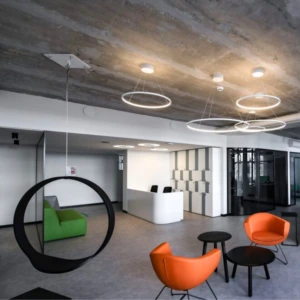
Modern interior of the KTU student information center featuring futuristic ceiling lights, orange and green lounge chairs, and a white reception desk in the background. The space is designed for student consultations and information services.

Doctoral School

Studentų g. 50, 51368 Kaunas
email phd@ktu.lt

let's talk

Faculty of Mechanical Engineering and Design
XII Chamber
Studentų St. 56, LT-51424 Kaunas
email midf@ktu.lt

Button Iconvirtual tour