


Skip to content

Environmental Engineering

Joint doctoral studies with Vytautas Magnus University and the Lithuanian Energy Institute.

These studies are aimed at individuals who wish to become highly qualified researchers and address environmental challenges by developing innovative solutions. The PhD programme provides knowledge of sustainable technologies, ecosystem management, environmental protection and policy, and applies the latest research methods in practice.

apply let's talk! about science field

Values of the Science Field

Female PhD student in pink blazer participating in eye tracking research using specialized eye tracking equipment – application of innovative neuroscientific research methods in doctoral studies at Kaunas University of Technology.
Relevance

These studies take an interdisciplinary approach, combining the latest environmental engineering technologies to address sustainability and environmental protection issues. They align research with the needs of industry and science, strengthening the ability to tackle challenges.


Two scientists in white protective suits discussing research in KTU laboratory while examining samples – doctoral studies scientific research environment at Kaunas University of Technology.
Opportunities

Doctoral students can participate in international projects, collaborate with researchers and industry leaders, and attend international conferences. The programme encourages involvement in discussions about environmental strategy, providing valuable experience in the development of startups, innovations and new technologies.


Female PhD student in laboratory attire conducting precise experimental research with microscope and specialized equipment in KTU laboratory – practical doctoral studies competencies and career prospects at Kaunas University of Technology.
Benefits

The doctoral programme offers the opportunity to obtain a double degree with the University of Bologna and the Doctor Europaeus Certificate. Support is provided for skills development and paid projects, and there are opportunities to present research, engage in industry collaborations and gain teaching experience.

Group of PhD students standing around white table in bright, modern space collaborating and discussing research – doctoral studies collaboration culture, scholarships and funding opportunities at Kaunas University of Technology.
Funding

Doctoral students receive a monthly scholarship and additional support for their studies, research and attendance at international conferences. Opportunities include Erasmus+ funded research placements abroad and funding to participate in international events. Additional scholarships are available for high academic performance and research activities.

Research Topics

Topic title Possible scientific supervisors Source of funding


Admission Requirements and Study Modules in the Field of Science

An arrow icon pointing right – represents the study level (Bachelor, Master, or PhD) in a structured academic path.
Cyclethird cycle
A clock icon indicates the form and duration of the programme.
Form, durationfull-time studies (4 yr.)
A speech bubble icon represents the language of instruction – often English for international, top-rated study programmes.
Language – Lithuanian, English
A graduation cap icon represents the degree awarded upon completion – bachelor’s, master’s, or doctoral qualification from a top university in Lithuania.
Degree awarded – Doctor of Science

Study Modules

Main modules

Module name Credits Method of organisation
Biosystems Engineering 9
Modern Environmental Protection Technologies 6 On-campus learning
Sustainable Development of Renewable Energy 6
Sustainable Industrial Development 9 On-campus learning

Alternative modules

Module name Credits Method of organisation
Advanced Solid Waste Treatment Technologies 9 On-campus learning
Advanced Water Treatment Technologies 6 On-campus learning
Agricultural Waste Decontamination, Processing and Recycling 6
Life Cycle Assessment 6 Blended learning
Product Ecodesign 6 On-campus learning
Production, Usage and Environmental Influence of Biofuel and Biolubricant 6
Sustainable Energy 6 Blended learning
Theory and Technologies of Air Pollution Abatement 6 On-campus learning
Water Quality Modelling 6

Elective modules

Module name Credits Method of organisation
Chemicals Risk Management 6 Blended learning
Environmental Management 9 On-campus learning
Environmentally friendly technological processes in agriculture 6
Nanotechnologies and Environmental Protection 6 On-campus learning
Physical - chemical analysis methods of environmental pollution 6
Sustainable Development of Cities 6 On-campus learning
Thermodynamic processes in biotechnology 6
Vibroacoustic processes in the system "Human-machine-environment" 6
Good to know
  • Main modules – provide essential knowledge in the field.
  • Alternative modules – allow deeper focus on alternative topics within the field.
  • Elective modules – help to individualize studies according to personal needs.
  • Core skills modules – develop general competences.
  • Main modules – provide essential knowledge in the field.
  • Alternative modules – allow deeper focus on alternative topics within the field.
  • Elective modules – help to individualize studies according to personal needs.
  • Core skills modules – develop general competences.
  • Main modules – provide essential knowledge in the field.
  • Alternative modules – allow deeper focus on alternative topics within the field.
  • Elective modules – help to individualize studies according to personal needs.
  • Core skills modules – develop general competences.
  • Main modules – provide essential knowledge in the field.
  • Alternative modules – allow deeper focus on alternative topics within the field.
  • Elective modules – help to individualize studies according to personal needs.
  • Core skills modules – develop general competences.
Persons with a Master's Degree or equivalent degree of higher education may participate in an open competition for admission to doctoral studies.
Applicants to the doctoral field of science are accepted by competition according to the competition score. 
Minimum competition score 7.0.
0,35 weighted grade point average of the diploma supplement
0,3 research experience
0,35 motivation interview
admission requirements dates and deadlines for admission all science (art) fields

Testimonials

A young woman with long, straight brown hair, wearing a black blouse, with her arms lowered, smiling professionally, photographed against a neutral background.

Having studied at KTU since my bachelor’s degree, I was confident in the quality of the courses and the inspiring academic community. This programme provides an opportunity to deepen theoretical knowledge and apply it to solving current environmental problems.

Gailė Pocevičiūtė
PhD student
A young woman with short brown hair, wearing a black high-neck blouse, one hand raised near her chin and the other lowered, smiling professionally against a neutral background.

Studying at KTU allowed me to gain in-depth knowledge of environmental engineering, a subject that is very relevant today. I can apply the knowledge I have acquired to sustainable business development activities. Everyone values their study experience differently – for me, the most important things were academic freedom and the opportunity to conduct research and deepen my theoretical knowledge, both at KTU and at other universities.

Zita Markevičiūtė
Founder of Pack’n GREEN


FAQ

Yes, Environmental Engineering doctoral studies provide the opportunity to undertake international traineeships through the Erasmus+ exchange programme. Doctoral students may also receive funding to participate in international events.

Yes, Environmental Engineering doctoral students must choose from a provided list of research topics.

PhD students receive a scholarship calculated based on the state-established Basic Social Benefit (BSI). In the first year of studies, the scholarship amounts to 19.0 BSI per month, while second, third and fourth-year doctoral students receive 22.0 BSI per month.

In 2026, the monthly scholarship for first-year students is 1,406 EUR, and for second to fourth year doctoral students it is 1,628 EUR per month.


Contacts

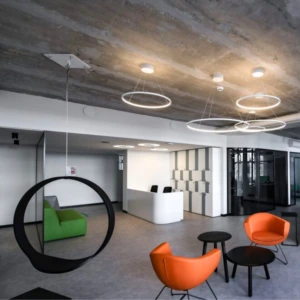
Modern interior of the KTU student information center featuring futuristic ceiling lights, orange and green lounge chairs, and a white reception desk in the background. The space is designed for student consultations and information services.

Doctoral School

Studentų g. 50, 51368 Kaunas
email phd@ktu.lt

let's talk

Faculty of Chemical Technology
IV Chamber
Radvilėnų pl. 19, LT-50299 Kaunas
email ctf@ktu.lt

Button Iconvirtual tour

Institute of Environmental Engineering
Gedimino St. 50, LT-44239 Kaunas

Button Iconvirtual tour