

Skip to content

Public Policy and Administration

This study programme is designed for individuals who wish to effect fundamental change within the public sector. During your studies, you will develop competencies in public policy and administration, equipping you to analyse complex societal challenges and make evidence-based decisions at national and international levels. The programme will provide you with robust research skills, teaching you to design and conduct quantitative and qualitative research, analyse data, and utilise advanced technological tools for information retrieval and analysis. These skills will enable you to understand the problems of the public sector and propose effective solutions.

The study programme will be implemented subject to approval by the Ministry of Education, Science and Sport.

apply chat with current students

Programme values

A student raises his hand during discussion – KTU encourages active participation, critical thinking, and self-driven decision-making. Flexible study paths allow each learner to shape their own academic journey.
Valued by industry leaders

The contemporary study programme, Public Policy and Administration, combines political science with public administration. Here, you will gain knowledge and learn to make data-driven decisions. You will develop technological literacy and data analytics skills while also mastering cutting-edge management tools. These are all essential competencies for leaders today, which will give you a clear advantage in the job market.

ntrance to the Faculty of Social Sciences, Arts and Humanities (SHMMF) at Kaunas University of Technology – a historical-style building located in the heart of Kaunas Old Town. It symbolizes KTU’s connection to the city's cultural heritage and its commitment to quality education in the city center.
Inspiring learning environment

Experienced lecturers and public sector practitioners will guide you through the process of forming and implementing effective public policy. During your studies, you will work with data analysis tools and digital platforms, delving into contemporary management methods that will enable you to apply theoretical knowledge to real-world solutions, thereby strengthening your preparedness for the current job market.

In a small, modern lecture space, students engage in a discussion on business development strategies led by a lecturer. The close-knit learning environment encourages active interaction and deep topic exploration.
Real-world cases

With the support of experienced professionals from the public sector, policy and management, you will gain hands-on experience in analysing public needs and developing data-driven solutions. Throughout your studies, you will work on genuine public policy and administration projects, gaining experience in everything from identifying problems to implementing solutions. This will help you to develop analytical thinking skills, a strategic approach, and the ability to create long-term value for the public sector.

Students studying using computers – a flexible academic environment that supports remote learning and self-paced study. KTU accommodates diverse learning styles.
New Freedom to shape your path

You have the opportunity to select modules that align with your interests and future plans. If you choose the Local and Regional Government option, you will study the fundamentals of local government, urban and regional development, and local economic growth. Meanwhile, the Political Communication and Technology option will enable you to develop expertise in political communication in the media, public relations management, and public information. The Product Development Project module will give you the chance to work in interdisciplinary teams to create products that are relevant to the public sector.

In this study programme, you can choose the following study paths:

Career opportunities

There are plenty of opportunities to shape the future of the public sector.

Here are a few career paths you could pursue after graduating:

Icon of a digital analytics dashboard – represents career paths in data analysis, business intelligence, and performance tracking using modern tech tools.
Public Policy Analyst

Analyses public policy challenges, evaluates public programmes and supports evidence-based decision-making. Collects and interprets data, prepares policy briefs and impact assessments, and formulates recommendations for improving public services and regulation. Works with stakeholders across government institutions, NGOs and international organisations, helping to design, monitor and evaluate policy interventions.

Checklist icon with cursor – reflects audit processes, quality review, and decision-making within academic or technical planning.
Project Manager

Initiates, plans and delivers significant initiatives in the public sector, NGOs or international organisations. Defines project scope, timelines and resources, coordinates teams and partners, and ensures projects are implemented on time and within budget. Manages risks and quality, maintains clear communication with stakeholders, and oversees reporting and accountability to achieve measurable outcomes.

Globe icon surrounded by animating circulating dynamic connections around it – reflects global career prospects, international travel, and qualifications recognized world-wide.
Civil Servant

Implements public policy and contributes to effective public administration. Prepares and administers policy measures, coordinates procedures, and ensures compliance with legal and ethical standards. Provides support for citizens and organisations, collaborates across departments and institutions, and helps improve public services through day-to-day operational work and continuous process enhancement.

Admission requirements and programme structure

An arrow icon pointing right – represents the study level (Bachelor, Master, or PhD) in a structured academic path.
Cyclefirst cycle
A document icon refers to the field of study – such as engineering, technology, business, and more.
Field – political sciences, public administration
A clock icon indicates the form and duration of the programme.
Form, duration full-time studies (4 yr.)
A calendar icon indicates the mode of study – full-time, remote, or blended learning.
Study typeday-time, on-campus
A speech bubble icon represents the language of instruction – often English for international, top-rated study programmes.
Language – English, Lithuanian
A graduation cap icon represents the degree awarded upon completion – bachelor’s, master’s, or doctoral qualification from a top university in Lithuania.
Degree awarded – Bachelor of Social Sciences and Public Administration
Module name Credits Method of organisation
Fundamentals of Administrative Law 6 Blended learning
Introduction to Research Methods 6 Blended learning
Political Theory 6 On-campus learning

Electives of Philosophy and Sustainable Development 2026 (Select 6 cr.)

Media Philosophy 6 Blended learning
Sustainable Development 6 On-campus learning

Foreign Language Electives (Level C1) 2026 (Select 6 cr.)

Academic and Technical Communication in English (Level C1) 6 On-campus learning
Academic and Technical Communication in French (Level C1) 6 On-campus learning
Academic and Technical Communication in German (Level C1) 6 On-campus learning
Module name Credits Method of organisation
Product Development Project 12 On-campus learning
Public Policy Analysis 6 On-campus learning
Risk and Crisis Management in the Public Sector 6 On-campus learning

Electives 1 (Select 6 cr.)

Basics of Local Governance 6 On-campus learning
Urban and Regional Development 6 Blended learning
Module name Credits Method of organisation
Bachelor’s Degree Final Project 15 Blended learning
Professional Internship 15 On-campus learning
Good to know
  • Module – a part of a study programme consisting of several related topics.
  • Credit – a unit of the volume of a study module in hours.
  • On-campus – learning on the university premises.
  • Blended – learning on the university premises and online.
  • Module – a part of a study programme consisting of several related topics.
  • Credit – a unit of the volume of a study module in hours.
  • On-campus – learning on the university premises.
  • Blended – learning on the university premises and online.
  • Module – a part of a study programme consisting of several related topics.
  • Credit – a unit of the volume of a study module in hours.
  • On-campus – learning on the university premises.
  • Blended – learning on the university premises and online.
  • Module – a part of a study programme consisting of several related topics.
  • Credit – a unit of the volume of a study module in hours.
  • On-campus – learning on the university premises.
  • Blended – learning on the university premises and online.
  • Module – a part of a study programme consisting of several related topics.
  • Credit – a unit of the volume of a study module in hours.
  • On-campus – learning on the university premises.
  • Blended – learning on the university premises and online.
  • Distance – almost all learning online.
  • Module – a part of a study programme consisting of several related topics.
  • Credit – a unit of the volume of a study module in hours.
  • On-campus – learning on the university premises.
  • Blended – learning on the university premises and online.
  • Module – a part of a study programme consisting of several related topics.
  • Credit – a unit of the volume of a study module in hours.
  • On-campus – learning on the university premises.
  • Blended – learning on the university premises and online.
  • Module – a part of a study programme consisting of several related topics.
  • Credit – a unit of the volume of a study module in hours.
  • On-campus – learning on the university premises.
  • Blended – learning on the university premises and online.
What will you learn
  • Gain a clear understanding of your studies and career pathways
  • Analyse how politics works in practice
  • Understand the principles of public administration, its link to public policy, and ethics in public service
  • Develop academic writing and communication skills
  • Conduct social research
  • Apply data analysis methods in practice and present research results
  • Critically analyse political theories by applying key concepts of political science and evaluating political processes
  • Apply principles of administrative law in public governance decisions
  • Conduct quantitative social research
  • Analyse international political processes
  • Compare political systems across contexts
  • Apply theories of public administration organisations and strategic planning knowledge in practical situations
  • Analyse European Union governance and policy-making
  • Critically evaluate democratic processes
  • Assess digital transformation in the public sector
  • Independently conduct qualitative social research using modern (including AI-based) tools
  • Analyse political systems of Central and Eastern Europe
  • Evaluate civil service and civil society
  • Apply public financial management principles
  • Analyse multi-level governance
  • Develop products that meet societal, business, and public sector needs from concept to implementation while working in interdisciplinary teams
  • Apply public policy analysis methods
  • Evaluate public policy decisions
  • Manage risks and crises in the public sector
  • Develop public programmes and projects
  • Evaluate innovation in public governance
  • Apply evidence-based public policy
  • Apply principles and practical methods of public service provision and administration
  • Design appropriate research framework
  • Apply suitable research methods, analysing collected data, and interpreting results
  • Prepare and present research findings
  • Apply theoretical knowledge to address real organisational challenges
Proficiency in English IELTS ≥ 5.5, TOEFL ≥ 75, CEFR ≥ B2, or equivalent.
Eligibility criteria: High school certificate.Maximum 3 years after high school graduation.

Minimum average grade (CGPA) >60% in each entry subject.

Transcript requirements: Obtain a suitable transcript from your school.

If unavailable, provide official translations and verified copies of the original documents.

Accepted languages: English / Russian.
Document legislation: The documents must be legalised (Apostille) by the Ministry of Foreign Affairs of the country where the documents were issued.

This requirement does not apply to the EU and Belarus, Ukraine documents.

Testimonials

A minimalist icon depicting a human silhouette with a shirt collar – this icon represents KTU partners or business representatives.

We particularly appreciate this programme’s strategic decision to integrate political science and public administration equally. This dual-track model produces specialists who are more versatile and able to see the entire decision-making process, from identifying problems and forming policies to practical administration and implementation. It avoids the common issue of graduates being either overly theoretical or merely technocratic implementers.

Ingrida Visockienė
Member of Kaunas City Council
A minimalist icon depicting a human silhouette with a shirt collar – this icon represents KTU partners or business representatives.

The programme’s distinguishing feature is its focus on solving complex problems by combining an understanding of politics with legal literacy and administrative skills. The transition from passive knowledge transfer to active competence building is particularly welcome, with innovative methods such as challenge-based learning and design-thinking being employed. The programme’s unique advantage lies in the synergy of social sciences and technology in the KTU context.

Jūra Lvonaitytė

International mobility partners

Students in this study programme most often go on exchange to the following partner universities:
all KTU exchange partners

You may also be interested in


FAQ

The Public Policy and Administration study programme is distinguished by its interdisciplinary approach, which combines the closely related yet often separately studied fields of political science and public administration. Alongside a robust theoretical grounding, students hone their practical skills in data analysis and modern management tools. This combination helps to develop digital and technological literacy, which is highly valued by employers today.

Graduates of the Public Policy and Administration programme have a wide range of further study options. Depending on your academic interests and career goals, you can pursue master’s studies in political science, public administration, sociology, or management, both in Lithuania and internationally.

You will learn how to analyse complex political, economic, and social processes, and how to make evidence-based, data-informed decisions. You will also develop the ability to apply contemporary technologies, work with diverse stakeholder groups, and collaborate effectively with public institutions and society.


Contacts

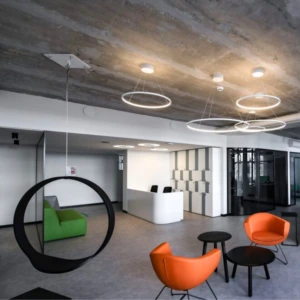
Modern interior of the KTU student information center featuring futuristic ceiling lights, orange and green lounge chairs, and a white reception desk in the background. The space is designed for student consultations and information services.

Talk to us, study with us:
K. Donelaičio St. 73, LT-44249 Kaunas
phone +370 679 44 555
email studijos@ktu.lt

let's talk

Faculty of Social Sciences, Arts and Humanities
I Chamber
A. Mickevičiaus St. 37, LT- 44244 Kaunas
email shmmf@ktu.lt

Button Iconvirtual tour