



Kaunas is a strong choice for international students who want a European study experience without the cost, pressure and scale of a major capital city. It combines recognised universities, a student-focused atmosphere, affordable accommodation, accessible public transport and a growing international community.
One of the key institutions shaping Kaunas as a study destination is Kaunas University of Technology (KTU), a leading Lithuanian university known for its strengths in engineering, technology, business, and applied research, and a top choice among international students.
10 reasons to study in Kaunas in 2026 are:
- Access to internationally recognised universities
- English-taught study programmes
- Practical, hands-on learning
- Technology-driven studies
- Affordable living costs
- Student-friendly city environment, green spaces and balanced lifestyle
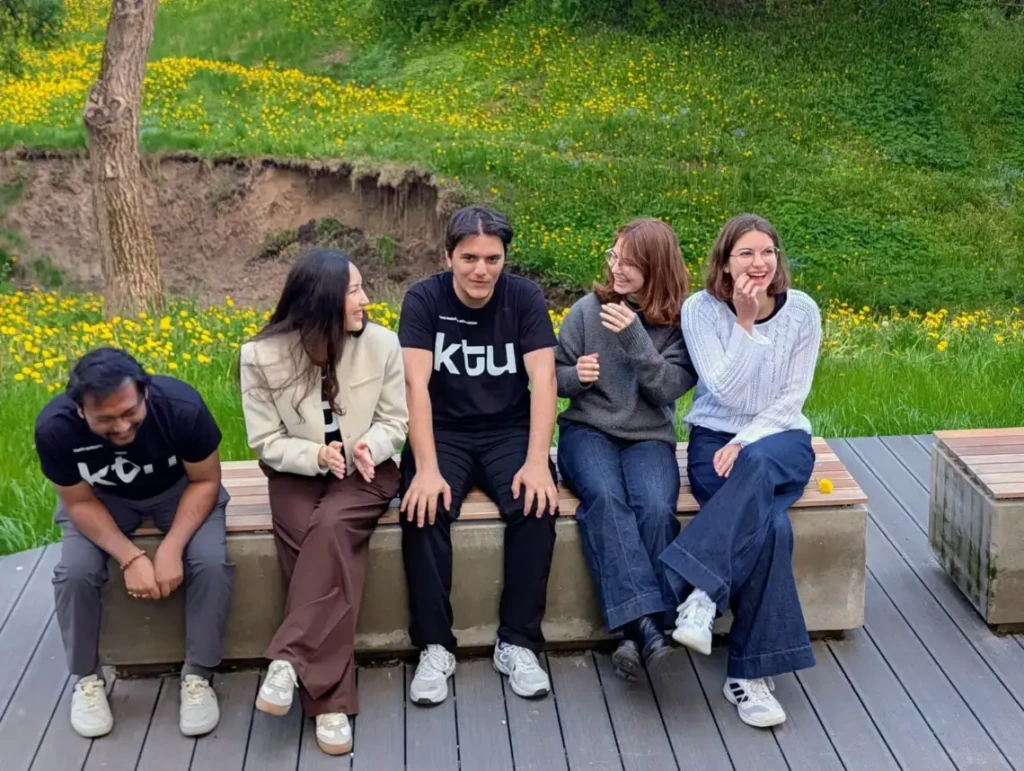
- Close-knit international student community
- Active cultural, social and sports life
- Easy mobility in Kaunas and beyond
- Legal work opportunities and a clear admissions process

Photograph by A. Aleksandravičius (courtesy of Kaunas IN).
What makes Kaunas especially attractive is the balance. It is not a city where students disappear into the background. Students are part of its everyday life – in the universities, cafés, libraries, parks, sports arenas, cultural venues and public spaces.
This city-wide student presence is one of the reasons Kaunas feels accessible to international students from the first months of living there. And it is not just words.
Kaunas – A Student City
Kaunas continues to strengthen its reputation as a student destination, as reflected in the latest QS Best Student Cities 2026 ranking, where Kaunas ranks 142nd, climbing five spots compared to the previous edition.
Quick Facts About Studying in Kaunas in 2026:
- Main study language options: Lithuanian and English
- International student community: Around 5,000 international students from more than 70 countries in Kaunas
- Student population: More than 40,000 students in the city
- KTU English-taught programmes: 62 programmes: 26 bachelor’s and 36 master’s
- Diploma recognition: Diplomas from Lithuanian universities are widely recognised across Europe and internationally.
- Average study duration: 3 or 4 years (KTU has many 3-year undergraduate study programmes) for a bachelor’s degree and 1.5–2 years for a master’s degree.
- Monthly student expenses: Around €450–€1000 per month, including rent
- Student transport pass: Approximately €5.60 per month with a valid student ID
- Work opportunities: Up to 40 hours per week after receiving a temporary residence permit
- Getting around the city: The average commute time is 29 minutes, but it can be around 15 minutes when living closer to the city centre; Kaunas also has around 140 km of cycling paths
- Airport access: Kaunas Airport offers flights to around 30 destinations in 13 countries
The city’s rise as a student destination is reflected not only in city-level rankings, but also in the performance of its higher education institutions. Kaunas universities perform strongly in regional and international rankings.
Top Universities and English-Taught Study Programmes in Kaunas (2026)
One of the leading choices for students in Kaunas and across Lithuania is Kaunas University of Technology (KTU), which is recognised as Lithuania’s strongest technical university in 2025, according to the Times Higher Education World University Rankings (THE WUR).
Other rankings strengthen KTU’s claim as one of the best universities. The QS Europe 2026 Rankings place KTU among the top 25% of European universities.
While KTU is best known as a university of technology, digital tools and contemporary technological approaches are embedded across business, social sciences, humanities, and arts programmes. This interdisciplinary strength is reflected in the Times Higher Education Subject Rankings 2026, where KTU leads among Lithuanian universities in business and economics, social sciences, and engineering.
What programmes does KTU offer? In 2026, KTU offers 62 English-taught degree programmes, including 36 master’s and 26 bachelor’s programmes across technology, engineering, social sciences, health, humanities, and arts fields, with strengths in engineering, artificial intelligence, data analytics, and applied technologies.
However, rankings and data tell only part of the story. Student reviews offer a more personal insight into what makes KTU stand out.
Academic Experience: Practical Learning and Technology-Driven Studies
KTU student feedback highlights the University’s strong academic reputation, hands-on approach to studies and focus on technological innovation.
Strong Academic Reputation
Through a double degree programme, Omar Limi from the University of Insubria in Varese, a Northern Italian town, spent a semester in Lithuania, studying International Business at KTU.
“When my university offered the opportunity to spend a semester abroad on Erasmus or via a double degree program, Kaunas was among the various destinations available. After doing some research on all the host cities and universities, I chose KTU in Kaunas because it is one of the most important Baltic universities and is recognised at the European level,” says Omar.
“Also, I didn’t want to choose a classic Erasmus destination, but wanted to discover a new country and culture, and Lithuania seemed like an interesting option,” he adds.
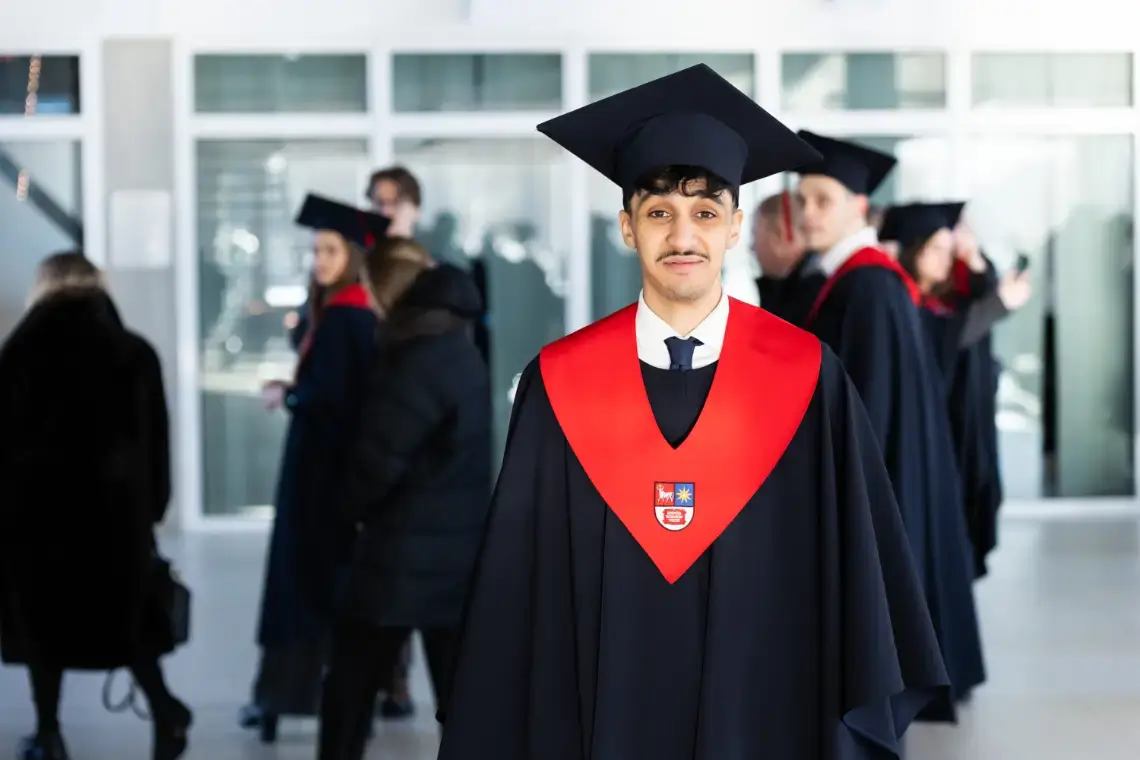
For him, Kaunas turned out to be a truly wonderful experience, both city-wise and academically. In 2026, KTU’s School of Economics and Business, from which Omar graduated, obtained the prestigious international AACSB (Association to Advance Collegiate Schools of Business) accreditation, held by less than 6% of the business schools globally.
Practical Learning
“Moving to another country for studies was 100% worth it,” says Nieves Ganghe Pedros Chamorro from Spain, who graduated from Chemical Technology and Engineering last June.
At KTU, Nieves appreciated the practicality of her studies: “Everything that was explained in theory was practised, not only on paper but in the laboratory, so the information was not only explained but also proved. Theoretical and practical lectures, along with laboratory works, make up a system that allows the student to retain the information much better and for much longer.”
The passionate teachers, who were willing to help in any way they could, the labs, classrooms, library and other facilities were, according to the student, “top notch”.

Technology-Driven Studies
“Before coming to Lithuania, I worked as a physics professor, thinking about more practical applications of my background education,” says Maria Rosa Rojas Noguera from Venezuela, who came to KTU to study medical physics, with a prestigious scholarship from the Marie Sklodowska-Curie Fellowship.
The last semester of her master’s at KTU, Maria (now a fresh-out-of-university alumna) spent in the SustAInLivWork research internship at Hamburg University of Technology (TUHH). “I felt curious to see how AI could be applied to diagnosis, treatment planning, and patient outcomes,” she says, reflecting on the valuable opportunity to develop skills, experience technological innovation first-hand, and gain insight into international research culture.

While KTU provides international students with a strong academic environment, practical learning opportunities and access to technology-driven studies, the student experience extends far beyond the University. The city itself plays an important role in shaping everyday life, offering a welcoming environment for international students.
Kaunas – a Great City for International Students
International students choose Kaunas because it offers affordable living costs, a growing international community, green spaces, cultural life and opportunities to work while studying. Compact and easy to navigate, it provides the advantages of a European student city without the pressure and expense often associated with major capitals.
Affordable Living Costs
Kaunas is affordable for students because accommodation, food and public transport costs remain relatively low. Students can choose from university dormitories, shared rooms or private rentals, while discounted public transport helps reduce everyday expenses. Compared with many larger Western European student cities, Kaunas offers a lower-cost study environment without sacrificing safety, accessibility or student life.
What is the Cost-of-Living Estimate in Kaunas in 2026?
The average monthly student budget in Kaunas ranges from €450 to €1000, including accommodation, which makes Kaunas significantly more affordable than many Western European cities. According to surveys, many students describe the city as an affordable place to live.
How Much Does Accommodation Cost in Kaunas?
- University Dormitories: €139–€301/month
- Private Shared Room: €200–€310/month
- Private Rent: €300–€800/month
Utility bills are often included in the price of university accommodation. However, if you decide to rent privately, they will be an additional cost. You will need to pay for internet, water, electricity, gas and various building maintenance charges, which may cost around €50–€70/month.
Heating costs should also be taken into account. In Lithuania, the heating season usually lasts from October to April. Heating can cost from around €70 for a smaller property during milder months to as much as €300 for a multi-room flat in an unrenovated building during very cold weather.
What Are the Average Monthly Expenses in Kaunas?
- Food: €150–€300/month.
- Student Transport Pass: Approximately €5.60/month with a valid student ID.
Other expenses and leisure activities may cost students around €100–€300/month. Of course, this part of the budget depends greatly on individual needs and lifestyle.
Student-Friendly City
Located in Northern Europe, Lithuania is increasingly recognised as a strong study-abroad destination, with Kaunas standing out as one of its most student-friendly cities. The city offers a balanced lifestyle – it is not too large or overwhelming, yet active and engaging.
“My favourite thing about Kaunas is its parks and how alive Centras (aka, the city centre) is. Also, let’s not forget about people!” says Raees Mohammed, a bachelor’s student of Electrical and Electronics Engineering from India, who has been living in Kaunas for three years.
Raes is one of the Study in Kaunas student ambassadors, happily sharing his experiences with prospective international students of Kaunas. However, he believes that no video can capture what Kaunas really is. “It’s that good, for real,” says Raes.
Green Spaces and Balanced Lifestyle
Busra Bilaloglu, a KTU School of Economics and Business graduate from Turkey, recommends Kaunas for all who consider studying abroad. According to her, it is a student-friendly and comfortable city, safe, affordable, and full of green spaces.
“I love nature, and when I felt down, I went for a walk to Ąžuolynas Park. When I needed a quiet and peaceful moment, I liked going by the lake to listen to the calmness of the water and the sounds of birds singing,” she says.

Close-knit Student Community
Is there a community of international students in Kaunas? Yes, Student life in Kaunas is often described as a vibrant yet peaceful mix of historic charm and contemporary energy. As Lithuania’s second-largest city (with a population of around 400,000) and a major academic hub, it hosts over 40,000 students, including approximately 5,000 international students from more than 70 countries.
As students in Kaunas take up a significant part of society, they are visible in the city scene. International communities across the universities in the city are becoming increasingly diverse – in Kaunas streets, one can meet people from India, Morocco, Turkey, Greece, Spain and other countries, including such remote destinations as the United States, New Zealand or Japan. KTU’s international students, who make up more than 15% of the student body, contribute significantly to a global and vibrant international Kaunas community.
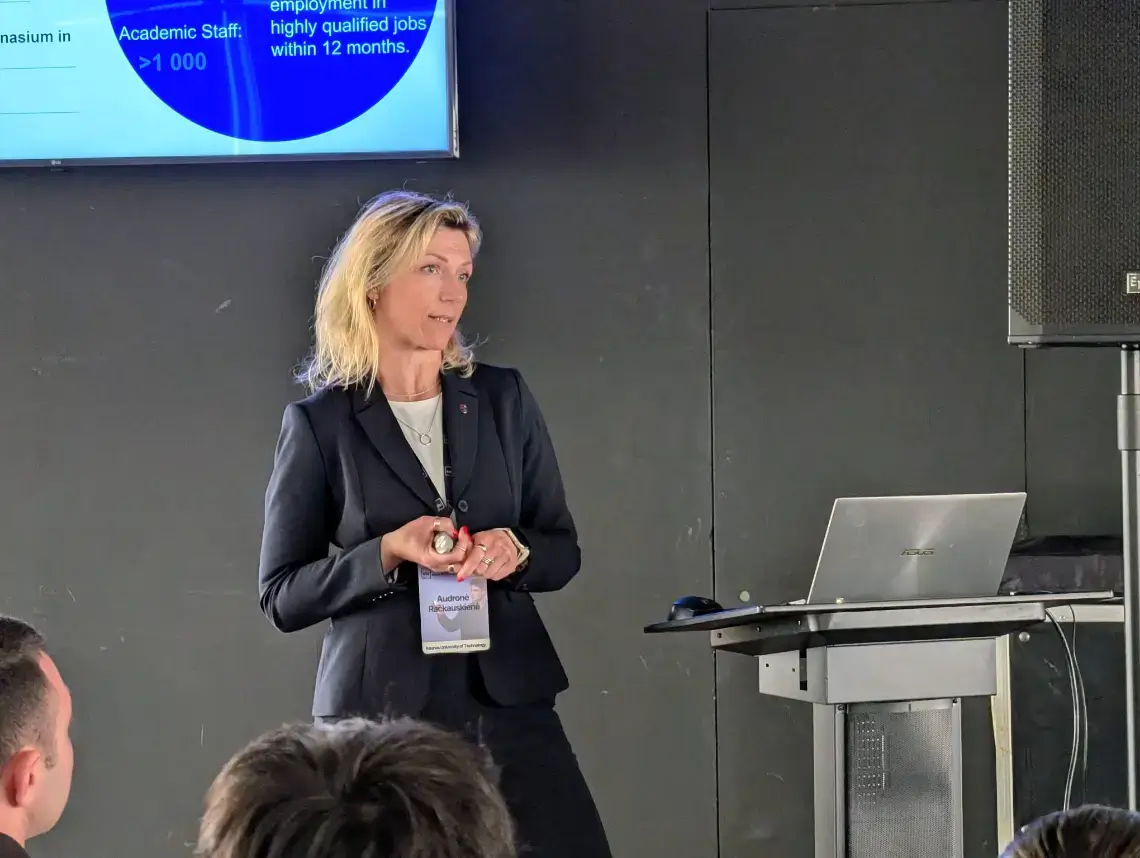
“We are welcoming a diverse generation of students from all over the world, and are truly happy to see growing interest from regions like Southeast Asia and Europe. Our recruitment focus in these areas has proven successful, bringing even more colour and energy to the KTU community,” says Audronė Račkauskienė, Head of the International Studies Office.
There are plenty of active and welcoming societies for international residents and students, such as Speak Lithuania, and local hubs of ESN (Erasmus Student Network). Remember, if you are interested in what it is like to be an international student in Kaunas, you can always chat with our current students.
Cultural Events and Entertainment
Kaunas offers thousands of cultural events each year, creating a vibrant and diverse cultural scene. The city also hosts numerous sports events, supported by extensive sports infrastructure and a well-developed network of cycling paths.
Kaunas is one of Lithuania’s leading sports cities. Žalgiris Arena – the largest multifunctional arena in the Baltic states – is the place to experience Lithuanian basketball at its finest, and attending a Žalgiris game is something every student should try at least once. The city also boasts the Darius and Girėnas Stadium, Lithuania’s only top-category UEFA-certified football ground, a modern rowing base, and a sailing centre on the scenic Kaunas Reservoir. Beyond sport, both venues regularly host major concerts, making Kaunas a city that truly never runs out of things to do.
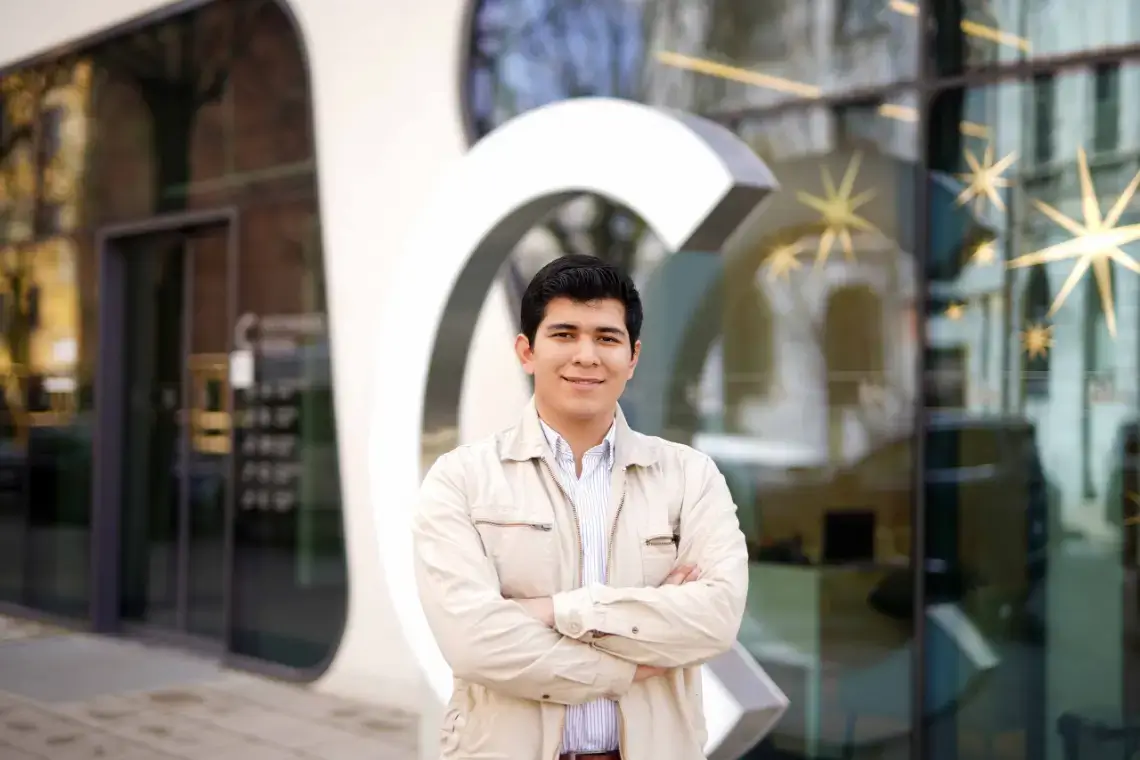
For Gerson David Pinto Chica, originally from Colombia and raised in Tanzania, the city rhythm is the most important feature.
“Kaunas is the perfect mix of calm and exciting. It’s full of events, concerts, outdoor activities, summer camping, and cosy gatherings inside during winter,” says Gerson, who has lived in Kaunas for four years.
After completing his bachelor’s degree in Mechatronics, he pursued a master’s in Control Technologies and now works as an embedded software engineer.
Sport as Part of Student Well-Being
Universities actively encourage student engagement beyond academics. KTU continually invests in the well-being of its students by improving their study environment, providing opportunities to participate in sports, arts societies and student associations. Some of these organisations have been founded by international students.
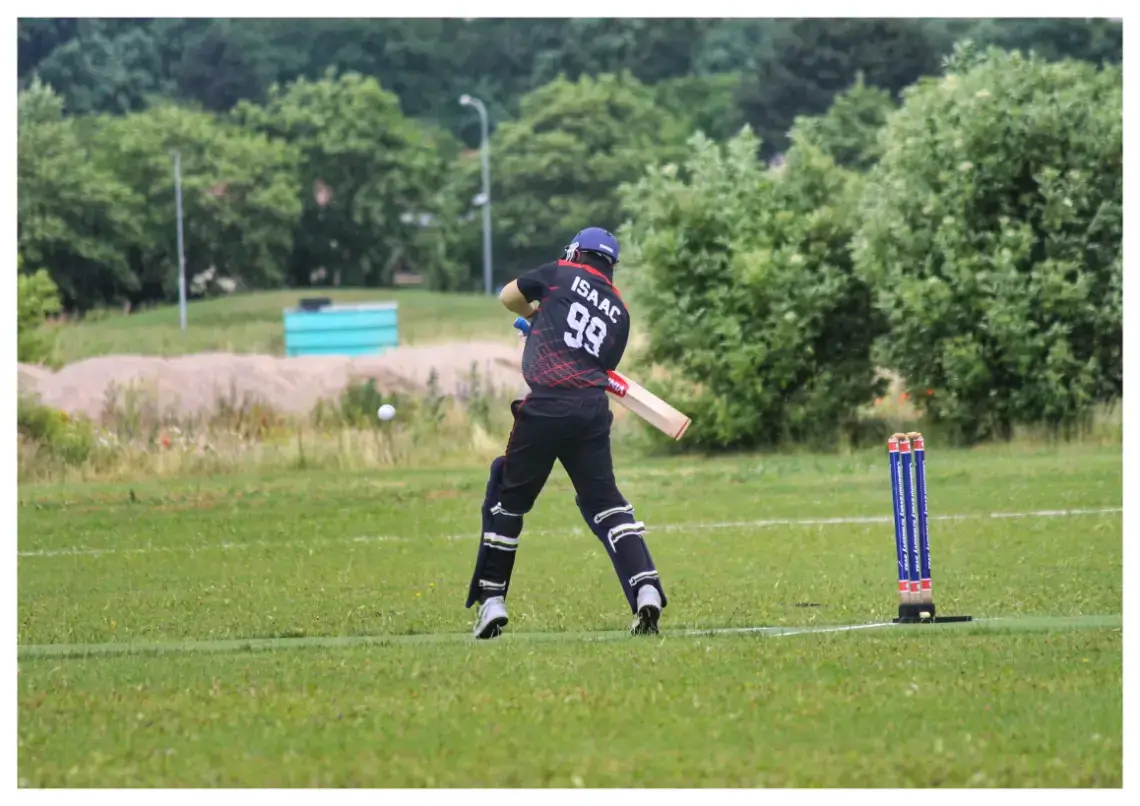
Research suggests that physically active students have higher self-esteem and better emotional control. KTU boasts 10 sports teams, and offers recreational training in 8 sports, including cricket – a rare option in Lithuania, but a hugely popular sport in many parts of the world.
“The benefits of training go far beyond the sport itself. Physically, cricket helps with endurance and overall fitness. Psychologically, it promotes discipline, focus and passion. Most importantly, it fosters coordination and teamwork, cross-cultural friendships, and a strong sense of community among students who might otherwise feel isolated in a foreign environment,” says Isaac Solomon, a PhD student at KTU and the coordinator of the KTU cricket team.
Founded in 2013 by a group of international students, the KTU cricket team has around 35 to 40 active members from India, Pakistan, Bangladesh and Sri Lanka, and other countries where it is a major sport. “This multicultural blend makes our team not only competitive but also culturally enriching. We truly believe cricket is more than a game. It is a way to bring people together, and we’re proud to be part of that at KTU,” says Isaac.
Getting Around Kaunas – easy and fast
Kaunas is a compact, walkable city with around 140 km of cycling paths – making it one of the most bicycle-friendly cities in the region.
Getting around is easy: public transport is reliable, with average commute times of around 30 minutes from outer areas to the city centre.
“In 10 minutes, you can find yourself in the middle of nature. This, I believe, improves the happiness of people and makes the city way more beautiful,” says Nieves Ganghe Pedros Chamorro, a KTU alumna from Spain.
The KTU campus is designed with everyday convenience in mind – dormitories, lecture halls, libraries, and leisure facilities are all within easy reach of each other. Research suggests that walkable and bikeable campuses contribute to better student wellbeing, as moving between buildings naturally adds to daily physical activity.
In recent years, the campus has seen significant investment in its outdoor environment. Studentų Street and other main routes are being redesigned, recreational paths added, and dedicated cycling lanes built to keep things smooth for both walkers and cyclists.
Kaunas Airport – a Gateway to Europe
Kaunas is also a great base for travel – whether you want to explore Lithuania or head further afield. The city has direct train and bus connections to Vilnius – just an hour away – and its central location makes travelling across Lithuania straightforward. Kaunas Airport, around 30 minutes from the city centre by public transport, offers flights to approximately 30 destinations across 13 countries.
Can International Students Work While Studying in Lithuania?
Yes. As an international student, you are allowed to work in Lithuania once you have obtained your Temporary Residence Permit (TRP). Bachelor’s, master’s, and PhD students can work up to 40 hours per week, as long as studies remain their main priority. For more information, visit workinlithuania.com.
Originally from Cape Town in South Africa, Johannes Coetsee found a job as a junior software engineer while still studying his bachelor’s in Mechatronics.
“I am very fulfilled with my life and work in Lithuania. As for now, I plan to stay here, build up some work experience, and pursue a master’s degree in computer science,” says Johannes.

KTU offers plenty of opportunities to grow beyond the classroom. Johannes himself took part in the GIFTed Talent Academy, where additional programming modules helped him fill the gaps in his knowledge before entering the job market. The university’s WANTed Programme is another great resource, designed to help students build practical skills and find their footing in the job market. And if you prefer a more personal approach, KTU’s Mentorship Programme connects you with experienced professionals – including dedicated career mentors – who can support you every step of the way.
How to Apply to Study in Kaunas: Admissions & Deadlines for 2026
The academic year in Lithuania starts on September 1st. Therefore, students planning to start their studies in September 2026 should be aware of the key application timeline.
The main admissions period for prospective international students applying for bachelor’s and master’s at KTU runs from October 15th until June 1st. Applications are to be submitted online.
However, if you are from Europe, you can receive state funding for your studies. In this case, the application period extends through June and July. Although to receive the state funding, you need to apply via the Lithuanian General Admissions Platform LAMA BPO, you are advised to contact the KTU international office for more information on the application process.
Nieves Ganghe from Spain appreciated the opportunity to study at KTU with the state funding: “Economically, this is very beneficial. Also, the university provides many other scholarships helping students and their families through their educational journey.”